Ten Minutes Often or One Long Session?
Compare short, frequent practice with a longer session to choose a routine that fits your attention, materials and available time, and makes starting easier.
The common mistake with practice is choosing a schedule that looks impressive on paper, then missing it when the day gets crowded. That can leave you feeling behind before you have made a useful start. For a new skill, should you practise for ten minutes often or choose one long session? The better fit depends on how you concentrate, what your materials require and when you can return.
What kind of practice are you trying to do?
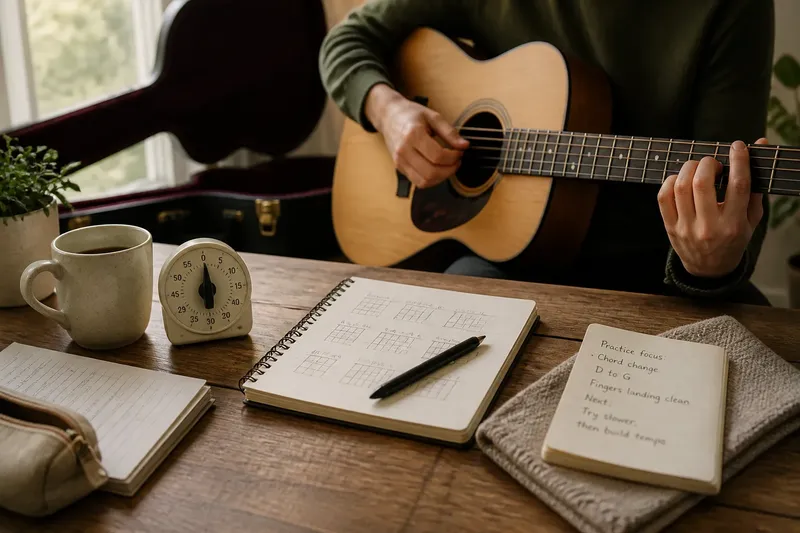
Start by naming the work, not by choosing a duration. A few minutes may suit sketching a hand, repeating a guitar chord change or revising a line of dialogue. A task that needs several materials laid out, a partner present or a long stretch of uninterrupted thought may call for a larger block.
Write down one specific action you can complete in a session. “Practise drawing” is hard to begin; “draw five versions of the same mug, changing the angle each time” gives you a clear place to start and stop.
Keep the action small enough to repeat, but meaningful enough to show you what needs attention next.
How does your attention behave?
Think about the point when your concentration usually changes. If you can focus readily but tend to lose the thread after a short stretch, brief sessions may help you return before the task feels heavy. If you need time to settle into a complicated problem, a longer session can give you room to work past the initial hesitation.
Use a simple note after each practice: what you worked on, where your attention drifted and what you want to try next. Avoid judging the session as good or bad. You are looking for practical clues about your own working rhythm.
If interruptions are frequent, choose an action that can survive a pause. A short drawing exercise can be put down and resumed more easily than a complicated piece of writing that depends on holding several ideas in mind.
What do your materials demand?
Some practice can begin almost at once. A notebook and pencil, a voice exercise or a short language drill need little preparation. Other work has a set-up cost: gathering tools, opening files, arranging a workspace or waiting for someone else to be available.
For low-preparation work, repeated short sessions can make it easier to practise on ordinary days. For work with a substantial set-up, consider putting related tasks together in a longer block. You might use that time to prepare, make, and leave a clear note about what remains, rather than repeatedly packing everything away halfway through.
Check the instructions for any specialist materials or equipment before setting a routine around them. Where the right handling depends on manufacturer guidance or local rules, follow that guidance.
How much usable time can you protect?
Look at the spaces in your week that are genuinely available, rather than the ones you wish were free. A short session might fit before a class, during a quiet break or at the start of an evening. A long block may be possible on a regular day off, but less realistic if it depends on perfect conditions.
Choose a time you can reach without turning preparation into another task. Keep a sketchbook beside the chair where you draw, or save a practice file where you can open it quickly. For a longer session, make a brief set-up list so you do not spend the whole block looking for materials.
Say you are learning to mend clothes, and your sewing kit is in a cupboard while your evenings are unpredictable. You decide to keep a scrap of fabric, needle and thread beside the kit, then use a short opening to sew one line of running stitches and leave the sample with the materials. The visible result is a row of stitches you can inspect next time; if the actual repair needs the garment and a calmer stretch of attention, you can reserve that connected work for a longer session.
Which practice rhythm fits your work?
Use the demands of the task to make an initial choice, then review how the routine fits. Neither format is automatically more disciplined. The useful schedule is the one that lets you begin, stay engaged and leave yourself a sensible next move.
- Check set-up time: If you can begin with a notebook, pencil or open file, then choose brief, repeated sessions; if you must gather several tools, then group the related work into a longer block instead.
- Check whether the task breaks into pieces: If each part can be completed independently, then use short sessions; if one stage depends on the previous one, then protect a longer stretch instead.
- Check your attention: If you can focus well in a short opening, then practise one defined action; if you need time to settle into the work, then try a longer block when one is genuinely available instead.
- Check how often interruptions occur: If the task can pause without losing your place, then keep a small exercise ready; if interruption would make you lose track of connected ideas, then choose a quieter, longer opening instead.
- Check whether another person is needed: If you can practise alone, then fit the work around your own available time; if a partner must be present, then arrange a shared block rather than relying on brief unscheduled openings.
- Check what happens at the stopping point: If you can leave a clear next action, then keep the current session size; if you repeatedly stop before reaching a useful point, then adjust the duration or divide the task differently instead.
- Check whether the routine is actually happening: If brief sessions fit your week and you return to the work, then continue them; if the planned long block keeps being postponed, then switch to a smaller repeatable action instead.
After each session, leave the materials ready for the next one where practical. Put a mark beside the exercise you reached, save the file with a clear name or write one sentence about what to continue. A good stopping point makes the next start easier.
What should you ask before settling on a routine?
Is ten minutes enough to practise a skill?
It can be, if you choose one focused action and use the time to work on it rather than setting up. A short session may be less suitable when the task needs a long warm-up, several connected stages or uninterrupted concentration.
Does a long session make more sense for creative work?
It can help when you need to develop an idea across several stages or stay with a difficult passage. It is not a useful default if the session is so hard to arrange that practice keeps being postponed.
What if my available time changes from week to week?
Keep a small version of the task ready for busy days and a fuller version for a more open stretch. For example, you could review a few lines of a script on a crowded day and work through a full scene when you can give it sustained attention.
How do I know when to change the rhythm?
Change it when the schedule repeatedly blocks the work: perhaps sessions end before you can begin, or long blocks are often cancelled. Keep the practice action stable while adjusting the time, so you can tell whether the new rhythm fits better.
How can you make the choice without overplanning?
Pick one format that fits your next available opening and decide what you will do before you sit down. When you finish, note whether the time was enough, whether set-up got in the way and what would make the next session easier. Let those observations guide a change rather than redesigning the whole routine in advance.
For the choice between ten minutes often and one long session, use the routine that helps you return to the work with a clear next action. If neither format fits as planned, keep the task and alter the shape of the time: brief practice can prepare for a longer session, and a long session can include deliberate stopping points.